Toto, We're Not In Kansas Anymore

Tommy Lawing • February 10, 2021

Toto, We're Not In Kansas Anymore

In a recent CE class, several Realtors tried to explain how to view 2021 using their personal experiences since entering real estate in the last 10 to 15 years. It was as enlightening as it was frustrating because it cannot be done.


Just as we could not use the lessons of 1929 (Stock Market Crash) only 11 years later to manage the events of 1940 (WWII), we could not use the lessons of 1950 (Korean War) just 11 years later to manage the events of 1961 (Space Program).  And, neither can we use the lessons of 2010 (housing bubble) to manage in 2021 (global pandemic).   


For instance, in real estate, there are three tried-and-true approaches to valuing a property but what happens when existing inventory is so low and new construction is so scarce that neither the Law of Substitution, the Market Approach nor the Cost Approach can be effectively applied? How does the seller know how much to ask or the buyer know how much to offer?


Add to the mix a plethora of global institutional investors who, after exhausting opportunities in equities, ETFs, emerging markets and rare metals, refocused on residential real estate. My real estate courses never explained what would happen when institutional investors with millions of dollars in cash would compete with families simply hoping to qualify for a mortgage to buy a house because it had never existed before.


Then there was COVID-19 when thousands of office workers moved to their spare bedrooms only to discover they could also move to less crowded, less expensive locales and keep their job. In 2010, 10% of workers worked remotely at least once a week. Today, the number is 25% and growing. Did an appraiser ever consider a possible pandemic’s effect on dense, expensive  center city housing when valuing a proposed high rise? Does anyone remember a chapter in his/her training on the needs & wants of remote workers?


For at least four generations, owning real estate has been the cornerstone of the American Dream, a way to grow wealthy but what happens when, instead, your employer will help you grow wealthy through its 401(k) plan and you can retain more freedom of movement renting your crib than owning it?  


Because of low inventory, scarce new construction, institutional investors, COVID-19, alternative investments and many other factors, 2021 is not like 2010 and cannot be viewed or managed using an 11 year old perspective.


To paraphrase Dorothy Gale, “Toto, We’re not in Kansas anymore” and we’re not in 2010 either.


Rental Real Talk
By Joe Rempson February 25, 2026
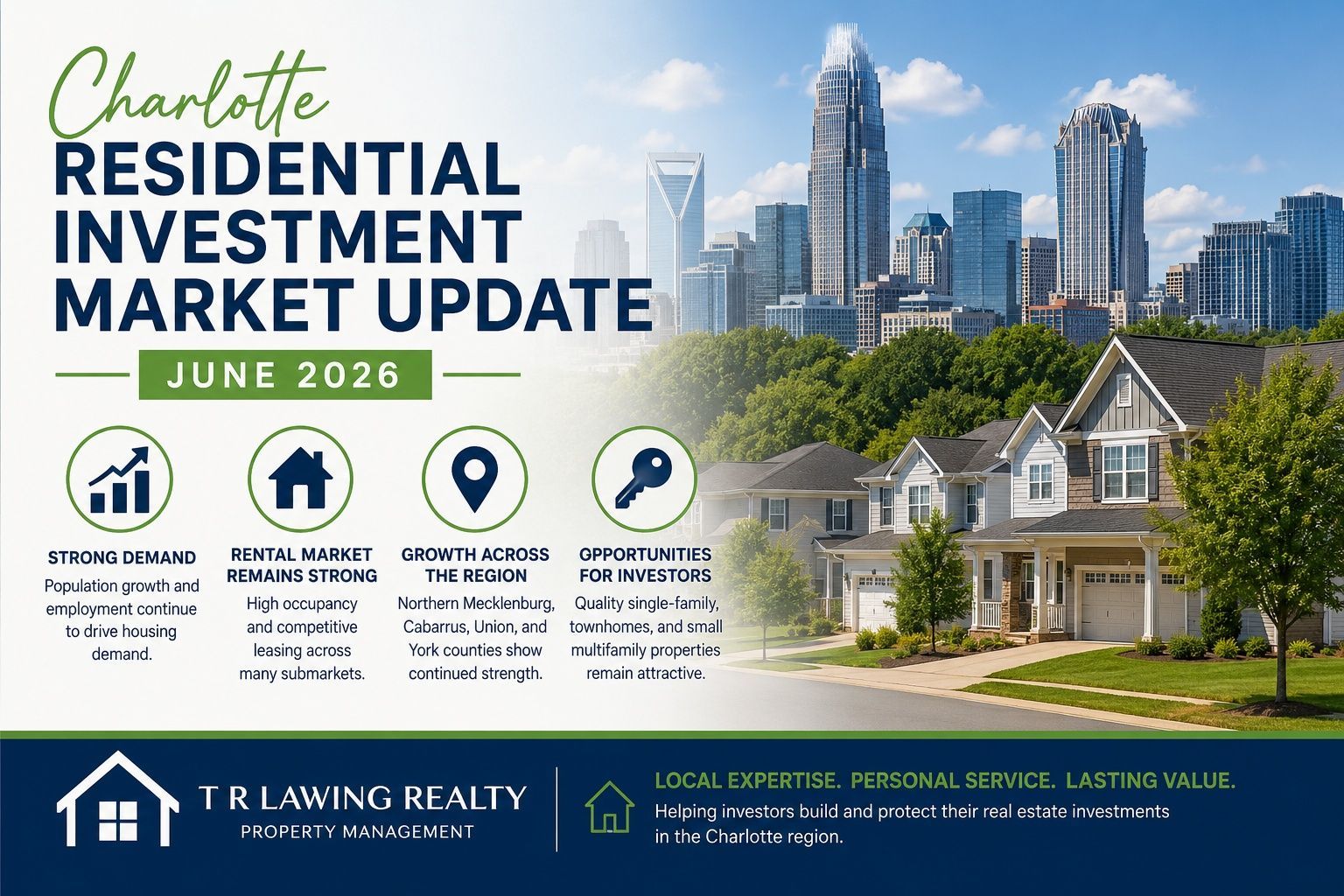
Market Overview (Home Sales & Prices) For buyers and sellers alike, the Charlotte metro continues shifting toward a more balanced market . Inventory has improved compared with past years, creating more choices and reducing frenetic buy-ups. Home values are rising modestly , helping sustain long-term market health without overheating. Starter and entry-level homes remain scarce — which keeps demand strong in that segment. Single-Family Rental (SFR) Market Snapshot Strong demand in the suburbs: Suburban areas around Charlotte (e.g., Indian Trail, Gastonia, Huntersville) have seen significant demand for single-family rentals due to remote work, quality schools, and lifestyle preferences. Rents on single-family homes in the region have grown faster than some apartment rents, reflecting tight availability and sustained interest among families and longer-term renters. Rent levels & trends: The overall rental market in Charlotte shows an average rent around ~$1,940/month across all types, with single-family units often fetching higher or competitive rates. Local data indicates single-family rents have increased over recent years, driven by limited supply of affordable homes for purchase and strong net migration to the region. Investment appeal: Investors are seeing solid returns in SFR properties , especially where purchase prices are below metro norms and rental demand is strong (e.g., near good schools or employment centers). While rents have been rising, the pace is moderating compared with peaks during post-pandemic demand surges, creating more predictable cash-flow dynamics for long-term buy-and-hold strategies. What This Means for You Buyers & Investors ✔ More balanced conditions make it easier to compare options. ✔ Single-family rentals remain a strong investment niche, especially in growing suburbs. ✔ Keep an eye on rent growth moderation — pricing strategies and property condition matter more than ever. Renters ✔ Strong renter demand means well-priced homes still lease quickly. ✔ Rental rates are elevated compared with pre-pandemic, but supply trends may help slow future increases. Albemarle, NC — Housing & Rental Market Highlights Home Sales & Prices Median home values in Albemarle are around ~$250K with a slight year-over-year softening or modest change depending on the source, indicating a relatively stable, moderate market compared with larger metros. Home listings show solid activity but homes may take longer than in the past to sell, suggesting more balanced conditions between buyers and sellers. Rental Market — Single-Family & Overall Median rent for listed rentals is approximately $1,497/month , though smaller “average rent” indexes suggest typical rents around ~$1,140–$1,170/month across the broader rental base. Rental listings in Albemarle are growing year-over-year (many more rentals now available than last year), even as median rent has softened slightly — a sign of more options for renters. Single-family rentals in smaller cities like Albemarle remain relatively affordable compared with markets in larger NC metros, making them appealing to families or long-term renters. Shelby, NC — Housing & Rental Market Snapshot Home Sales & Prices The median sale price of homes in Shelby has risen notably (~+13% year-over-year) , with homes selling in under about 80–90 days — reasonable activity for this market size. This price growth suggests stronger demand or tighter supply locally compared with broader rural trends in North Carolina. Rental Market — Including SFR Average rents in Shelby are relatively affordable at about ~$992/month , lower than many other NC regions. Rent levels have seen a slight decrease or remained flat in the last year, indicating relatively soft rental growth — but still steady demand for housing. Because average rents are lower, single-family rentals can present solid cash-flow potential for local investors purchasing below or near median home values, especially as home prices rise. Outlook — Albemarle & Shelby Smaller NC markets like Albemarle and Shelby currently show: Stable or modest home price trends with some localized growth. Affordable rent levels compared with national averages. Rental demand that supports single-family rentals cost-effectively, even if rent growth is softer. That makes both areas attractive for investors interested in single-family rentals who want markets with lower entry costs and steady rental income potential, while local buyers and renters benefit from affordability and increasing housing options .
By Joe Rempson November 1, 2025
WFNZ’s Street Turkeys
By Tommy Lawing Jr September 1, 2025
Diversification: Spreading Risks and Rewards
By Joe Rempson August 5, 2025
Invest in North Carolina
By Joe Rempson August 5, 2025
Summer Fun & Safety
child with coin jar
By Tommy Lawing, JR March 23, 2022
Children & Money
By Jennifer Mullis January 19, 2021
Cost of living in and around Charlotte, NC
By Thomas R. Lawing, Jr. January 7, 2021
What did we learn in 2020?
By Jennifer Mullis January 4, 2021
Year In Review
By Jennifer Mullis December 29, 2020
Why Invest in Real Estate?